
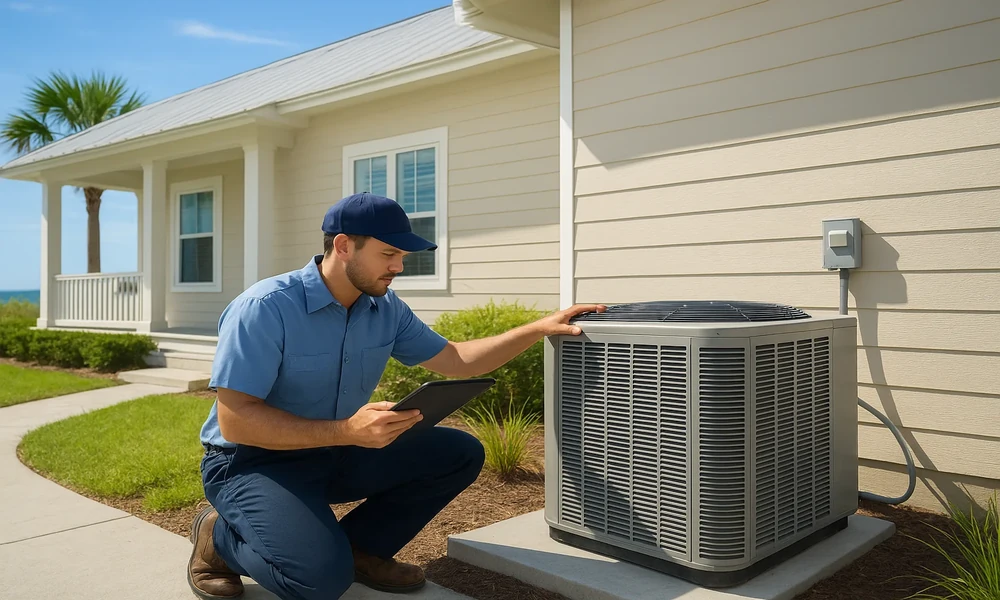
A heat pump installed in a Myrtle Beach neighborhood looks a lot like one installed 200 miles inland. The box sits on a pad, the line set runs to the house, and the thermostat goes on the hallway wall. What’s different is everything working against that equipment once the installer leaves. Wind, salt, standing water and months of sticky air all test a coastal system in ways an inland unit rarely faces.
Those forces are the reason a beach house install needs more planning up front. A system that’s perfectly sized and wired can still fail early if it’s set too low in a flood-prone yard. The same goes for an outdoor coil facing straight into the ocean breeze, or ducts snaking through a 130 degree attic without proper sealing.
For homeowners weighing a replacement, talking with an HVAC contractor in Myrtle Beach who regularly works on coastal homes and condos can make these details easier to sort out. Local crews see how equipment ages along the Grand Strand. That experience shapes where units go, how they’re protected, and which add-ons are worth paying for in this climate.
Sizing Starts With Moisture, Not Square Footage
The old rule of thumb of one ton of cooling per so many square feet doesn’t hold up well on the coast. Humid air carries a heavy moisture load. An air conditioner has to remove that water, not just lower the temperature.
ENERGY STAR’s guidance for hiring a heating and cooling contractor makes the point plainly: bigger isn’t always better. A good contractor should size the system based on the house itself, including insulation and windows, and should inspect the ductwork and measure airflow. Oversized equipment in a humid climate cools a room fast and shuts off before it dries the air. The result is a cold, clammy house and a system that wears itself out cycling on and off.
Variable speed equipment has become popular along the coast for this reason. These systems run longer at lower output. That steady operation gives the indoor coil more time to pull moisture out. For homes that still feel damp, a whole home dehumidifier paired with the system can fill the gap.
Wind Decides How the Outdoor Unit Gets Secured
Along the coast, tropical storms and strong gusts aren’t rare events. They’re part of the calendar. An outdoor unit that isn’t fastened down can shift, tip or tear loose from its refrigerant lines in high winds.
In coastal wind zones, outdoor units are commonly anchored to the pad with brackets or tie-down straps. Rooftop and balcony units on condos often need additional mounting hardware. When comparing estimates, it’s worth noticing whether anchoring is mentioned at all. A bid that skips it may be cheaper for a reason.
Water Sets the Height
Many Grand Strand properties sit in or near flood zones. Equipment that sits at ground level in those areas is vulnerable to storm surge and heavy rain runoff. Saltwater flooding is especially hard on electrical parts and coils, and flooded equipment often needs replacement.
Raising the outdoor unit on a platform or stand above expected flood levels is a common fix. Some homes also move air handlers out of ground floor closets and into conditioned space higher up. These changes cost more at install, but they can spare an owner a full replacement after one bad storm.
Salt Air Shortens the Life of Unprotected Coils
Ocean air carries fine salt particles that settle on outdoor coils and slowly corrode the metal. A unit facing the water or sitting a few blocks from the beach takes the brunt of it.
Coastal installs often include coils with protective coatings or units built specifically for seaside conditions. Placement matters too. A spot sheltered from the direct ocean breeze, with plenty of clearance for airflow, helps the coil last longer. Regular rinsing with fresh water keeps salt from building up between service visits.
Hot Attics Make Duct Work Critical
Most homes in the area run their ductwork through the attic. In summer, that space gets far hotter than the outdoors. Any leak in the ducts pulls in hot, humid attic air or dumps cooled air where nobody benefits from it.
ENERGY STAR notes that sealing and insulating ducts can improve both efficiency and comfort. On the coast, it also helps with humidity control, since leaky return ducts can draw moist attic air straight into the system. A replacement is a good time to have ducts tested and sealed, since the old system is already coming out.
Questions Worth Raising Before Signing
A few questions can reveal how carefully a coastal install is being planned:
- Was a load calculation done, or was the size matched to the old unit?
- How will the outdoor unit be anchored against high winds?
- Will the unit be raised above likely flood levels if the property needs it?
- Does the equipment have coil protection suited to salt air?
- Will the ducts be inspected, sealed or replaced as part of the job?
- Which refrigerant does the new system use, and are the technicians trained on it?
That last question matters more than it used to. Since the start of 2025, new residential systems have been shifting to lower impact refrigerants such as R-454B and R-32. These require updated handling and installation practices. Technicians familiar with the newer equipment avoid costly mistakes during setup.
Condos Bring Their Own Rules
Condo owners face limits that single-family homeowners don’t. HOAs may control where outdoor units sit, what they look like and when contractors can work. Some buildings require specific equipment sizes to fit existing platforms or closets. Checking association rules before collecting bids saves time and prevents a rejected install.
Units in towers also tend to share drain lines and building infrastructure. A clogged condensate line on the eighth floor can become a neighbor’s problem below. That’s one more reason why float switches and accessible drain cleanouts are worth including in a condo replacement.
A coastal home asks more of its heating and cooling system than most inland houses do. The equipment itself may be the same, but the installation choices around it decide how long it lasts. Planning for wind, water, salt and moisture from the start costs less than dealing with any of them after the fact.

Comments are closed.