
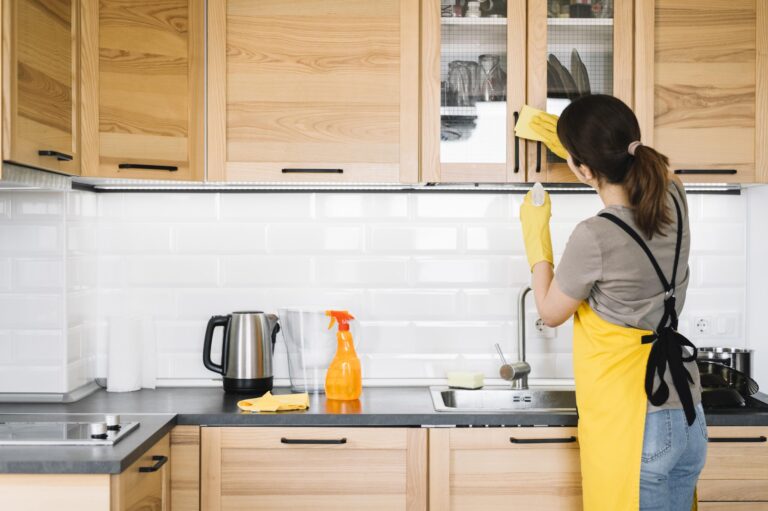
From the faint evidence of that pasta sauce incident to the grease splatter from last week’s ambitious Sunday roast, your kitchen cabinets have seen it all. If you’ve been avoiding the inside of those doors, you’re not alone, but the time has come.
The good news is that with the right technique, you can make your cabinets look spotless, not just presentable from a distance. Here’s how to start.
Take Stock Before You Start
Before you pull on the rubber gloves and go at it, have a proper look at what you’re dealing with. Open every door and drawer. Then, check the exteriors, the interiors, the hinges, and the handles.
You’re looking for grease build-up, sticky residue, water stains, and any structural issues, like loose hinges or chipped edges that’ll need attention later. Once you spot these, note them down so you don’t forget later.
It’s also worth identifying what your cabinets are actually made of. Wood, laminate, and painted MDF all respond differently to cleaning products and moisture.
This means that using the wrong solution can cause swelling, peeling, or dull patches that are far harder to fix than a bit of grime.
Empty Them Completely
You may feel like you’re creating a bigger mess before you’ve even started cleaning. But if you leave everything inside and just wipe around it, you’ll end up just skimming the surface.
So, take everything out and place it on a clean surface nearby. While you’re at it, sift through the items. Chuck anything out of date, donate duplicates, and think about what actually needs to go back in.
It’s one of the most useful side effects of this whole process. You’ll probably find a tin of chickpeas from three houses ago and a garlic press you forgot you owned.
Gather Your Supplies
Now that you can see the full scale of the job, pull together what you’ll need. Having everything within reach will save you from dripping water across your kitchen while you hunt for a cloth halfway through.
For most cabinets, you won’t need anything fancy. Here’s your basic kit:
- A few microfibre cloths;
- A couple of sponges;
- A soft-bristle brush;
- A small bucket or bowl;
- Washing-up liquid or a mild all-purpose cleaner;
- Baking soda for stubborn spots;
- A dry cloth for buffing.
Eco-friendly products work well and tend to be kinder to cabinet finishes, especially if you’re working with wood or painted surfaces. And if you already have baking soda at home, you’re practically ready to go.
Clean the Exteriors First
Start on the outside. Use a dry microfibre cloth to dust off the tops and sides, then switch to a damp cloth with a mild cleaning solution for the main surfaces.
Work from top to bottom so any drips fall onto areas you haven’t cleaned yet. For the handles and knobs, which collect more grime than people ever expect, use a soft brush to get into the grooves.
If you hit a patch of sticky grease, make a paste with baking soda and a little water, apply it, and leave it for 10 minutes. Then, gently scrub the area with your sponge in small circular motions. Don’t go hard at wooden surfaces; they scratch more easily than they look.
Finish things off by drying each section with a clean cloth. It’ll only take a moment, but it’ll prevent streaks and leave your cabinets looking fresh.
Tackle the Interiors
With the exteriors sorted, move inside. Use your brush to lift out crumbs, dust, and whatever else has settled into the corners. This will stop you from smearing dry debris around with a wet cloth.
Follow up with a damp cloth and your mild cleaning solution, wiping all surfaces thoroughly and paying attention to the back panels and the undersides of shelves.
For stubborn stains, the baking soda paste works just as well here. Apply it, wait, and scrub the spot gently. It handles most marks without risking damage to the surface.
Before you put anything back, dry every surface well. Moisture trapped inside cabinets is exactly how mould gets a foothold, and that’s a whole other problem you don’t want.
Refresh the Hardware
Cabinet doors and drawers are only part of the story. The hinges, handles, and runners deserve attention, too, and they’re almost always ignored.
Wipe down the hinges with a damp cloth and check if they’re moving properly. If any feel stiff or look corroded, a small amount of WD-40 applied sparingly will sort it. Also, tighten any screws that have worked loose while you’re at it.
Finally, clean the handles and knobs thoroughly. They’re touched constantly, which means they collect far more grime and bacteria than you might expect.
Dab some disinfectant onto your cloth instead of spraying the handles and knobs directly. It’s safer for these surfaces and just as effective.
Restock Thoughtfully
Now, it’s time for the part that makes all of this feel worth it. But before you pile everything back in, think about how you use the space day to day.
The items you reach for every day, like your plates and mugs, should be placed at a comfortable height. As for the less-used ones, you can store them higher up or towards the back.
If you’ve ever opened a cabinet and watched everything slide forward at once, this is where small upgrades help. Pull-out organisers, shelf dividers, or a lazy Susan aren’t just for showroom kitchens. They can actually make awkward spaces easier to use.
Clear containers for dry goods make life simpler, too. When you can see what you have, you’re less likely to overbuy or let things expire at the back.
Keep It up Without Overthinking It
You don’t need to turn cabinet cleaning into a monthly event worthy of a calendar alert in bold red.
Wiping the exteriors once a week is usually enough to stop grease and fingerprints from building up. Then every few months, take a bit more time to empty one section at a time and give the interiors a refresh.
If your kitchen sees a lot of heavy cooking or if you’ve moved into a place where the cabinets haven’t been touched in years, you can always bring in professionals for help.
Many domestic cleaning services across the UK offer a one-off deep clean, and you’ll find that starting with a clean slate makes ongoing maintenance far more manageable.
Conclusion
Well done! You now have cabinet doors that open without sticky resistance, shelves you’d actually let someone see, and there isn’t a single rogue chickpea in sight.
It took a bit of effort, but you’ve done something most people keep adding to the bottom of the to-do list indefinitely. So, put the kettle on and step back to admire your handiwork.