
Spring storms across North Texas get logged by the size of the ice they drop. Weather spotters compare stones to peas, quarters, golf balls and baseballs, and those comparisons tell a homeowner far more than how loud the storm sounded against the windows. A roof does not fail because a storm was scary. It fails because the stones crossed a size its material was never built to handle.
That reality is pushing many homeowners in Frisco, Plano and McKinney toward metal shingles, and the stamped steel system High Performance Roofing backs with a forty year guarantee against hail of any size shows how far the market has moved. The women owned crew works across Denton and Collin Counties, begins each job with a drone inspection, and also handles windows, doors and gutters. Whatever covers your attic today, the stones follow the same rules, and climbing the size scale one step at a time reveals exactly where each material starts to give way.
Pea Gravel Falling From the Sky
Hail between a quarter inch and three quarters of an inch rarely breaks anything on its own. What it does is scrub. On an asphalt roof that is already ten or twelve years old, small stones knock loose granules that have been baking loose in the sun for years. Those granules are the shingle’s sunscreen, so every handful that washes into the gutter leaves the asphalt underneath more exposed to ultraviolet light.
If you find a thick layer of granules in the downspouts after a mild storm, the storm usually is not the real story. It is telling you the roof was nearing the end of its useful life anyway. Metal shingles barely register stones this small, and their painted or stone coated finishes come through without a mark.
When a Quarter Changes the Conversation
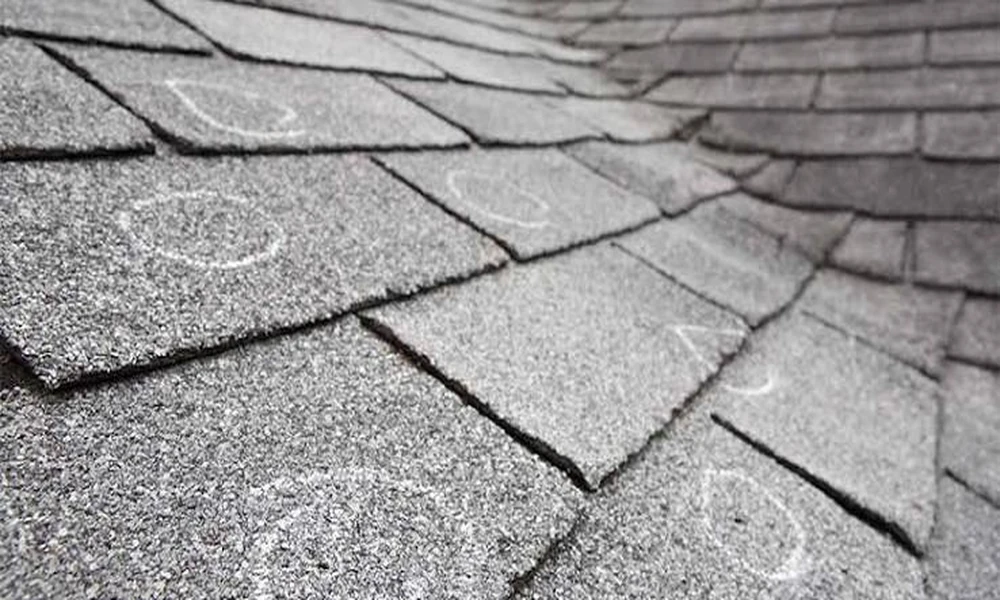
One inch is the size the National Weather Service uses to call a thunderstorm severe, and it is also roughly where asphalt starts to take real injury. The damage is easy to miss from the ground. A stone this size can bruise a shingle, crushing the fiberglass mat beneath the granules without leaving a visible hole. Press on a bruise and it feels soft, almost like a ripe piece of fruit.
Bruises often stay dry for months. Then summer heat and a few more rains widen the fracture, and a stain shows up on a bedroom ceiling long after anyone remembers the storm. Soft metal around the house helps date the damage. Dents on gutters, roof vents and the fins of an outdoor AC unit work as a record of the stone sizes that hit your property, which is useful when an adjuster asks what happened and when.
Golf Balls and the Lab That Imitates Them
At an inch and three quarters, hail moves from nuisance to a genuine test of the product. Roofing manufacturers measure this through UL 2218, a standard that drops steel balls onto a roof covering from set heights. The balls come in four diameters, from an inch and a quarter up to two inches, and each one strikes the same spot twice. A product that survives the two inch ball without cracking earns a Class 4 rating, the highest available.
There is a detail in that test that surprises people. It checks whether the covering cracks or stops shedding water. It does not check whether the surface dents. A metal shingle can carry a Class 4 rating and still come out of a storm with dimples, because dimples are not what the test is looking for. Some manufacturers also test with real ice under a separate standard, FM 4473, which gets closer to how actual hail behaves on impact.
When you are comparing products, the paperwork tells you more than the brochure. These are the details worth finding before a contract is signed.
- The impact class printed on the product label, along with the standard it was tested under.
- The manufacturer’s name and the brand of the specific product, not just the product family.
- Whether the warranty covers cosmetic dents or only leaks and structural failure.
- Whether the installer will certify the installation on official state paperwork.
Baseballs and the Dent Debate
Stones two and three quarter inches across and larger are where every material shows its limits. Even Class 4 asphalt can fracture under baseball hail, since the lab test stops at two inches. Metal resists puncture well at these sizes, but it dents, and denting raises a question that matters more in Texas every year.
Many homeowners policies in the state now carry cosmetic damage exclusions, especially on metal roofs. Under that language, a dent that does not let water in may not be paid at all. The practical question for a homeowner then shifts from whether the roof will leak to who pays when it looks hammered. A manufacturer or installer guarantee that covers appearance fills a gap an insurance policy may leave open. Profile matters too. Textured stone coated shingles and embossed patterns hide small dents far better than flat, glossy panels, where every dimple catches the afternoon light.
Paper That Pays You Back
Texas has encouraged impact rated roofing through insurance credits since the late 1990s. According to the Texas Department of Insurance, a Class 4 covering earns the largest premium credit, though each insurance company sets its own discount amount. To qualify, the roofing needs a proper laboratory label showing its impact class under UL 2218.
The installer typically fills out a state impact resistant roofing installation form after the job. Keep that form with your closing papers and warranty packet. It proves what is on the roof if you change carriers, and it gives a future buyer a reason to value the house more. Because discounts vary so widely by company, a ten minute call to your carrier before choosing a material tells you the real number instead of a sales estimate.
Heat, Noise and the Layers Nobody Sees
Hail gets the attention, but a North Texas roof spends far more days under a hundred degree sun than under a storm. Light reflective coatings on metal shingles bounce back a large share of that heat, and shingles installed over battens leave a thin air gap that slows heat from reaching the deck. Pair that with balanced soffit and ridge ventilation and the attic stays noticeably cooler through August.
The fear that metal sounds like a tin shed during rain mostly comes from barns with open rafters. Over solid decking and a quality underlayment, a metal shingle roof sounds close to a standard asphalt one from inside the house.
Then come the parts that never appear in a product rating. Fastener pattern, drip edge, valley metal and new flashing around chimneys and walls decide how a roof handles straight line wind, which often arrives with the same storms that carry hail. A Class 4 shingle tells you very little if old flashing gets reused or nails land outside the manufacturer’s zone.
The next time a storm report lists hail sizes for your zip code, read it against what is on your roof. Small stones mean a gutter check. Quarter sized stones mean a closer look for bruising. Golf balls and larger mean a professional inspection, a call to your carrier, and a careful read of what your policy says about dents before anyone starts tearing off shingles.

Comments are closed.